Designing for the Frontlines: What the Carecube Gets Right
The Carecube represents something we don’t talk about enough in healthcare: proactive preparedness.

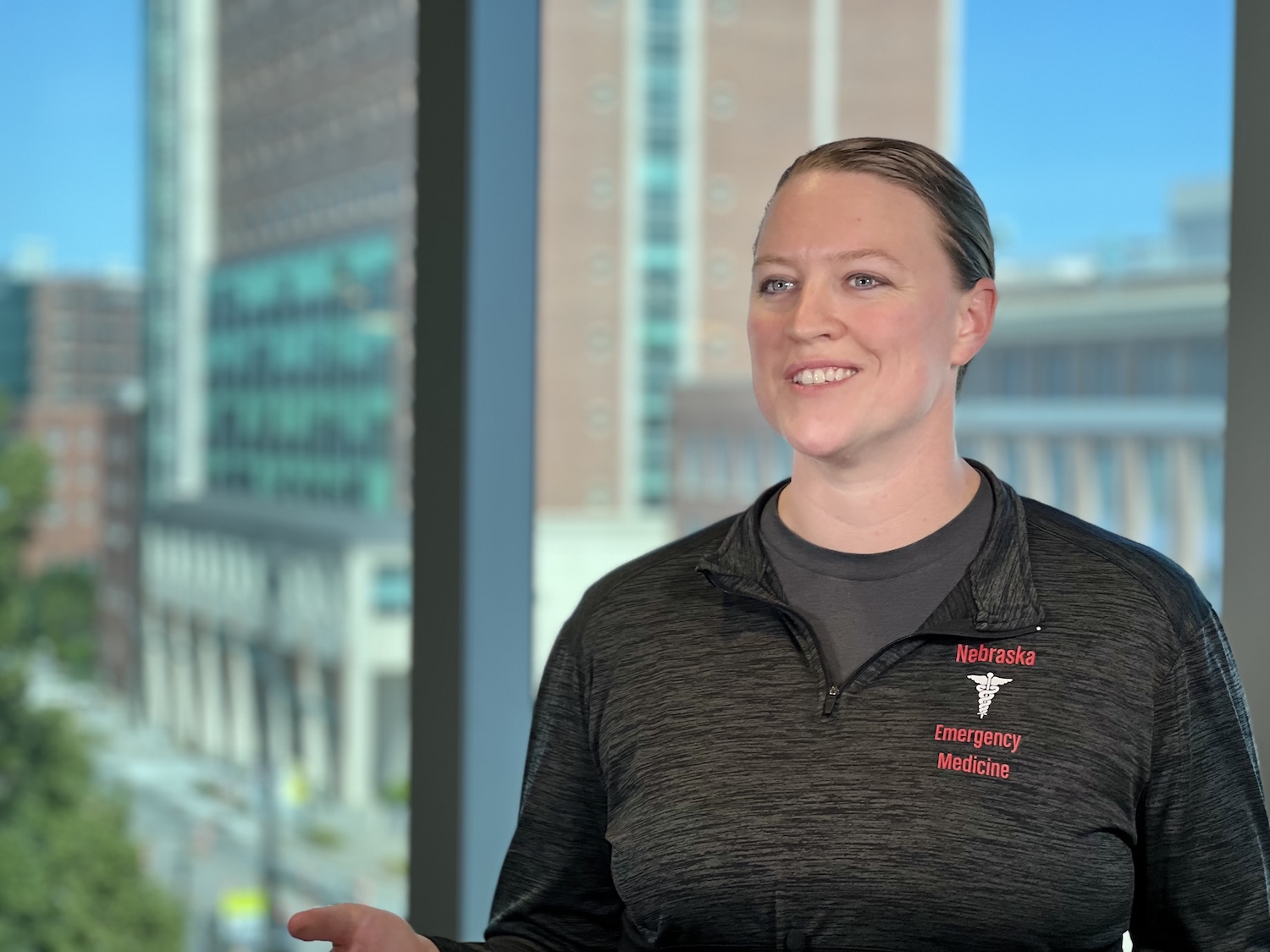
As an emergency physician, I’m trained to make quick decisions, manage chaos, and care for patients in the most unpredictable circumstances. But in the early days of COVID-19, that unpredictability reached a different level. We were suddenly treating patients with a novel, highly contagious virus—often without adequate protective equipment, clear protocols, or infrastructure to keep ourselves, our teams, and other patients safe.
That experience drew me into the world of biocontainment and, eventually, into the development of the Carecube.
I joined the Carecube project in early 2021. My role was to help answer a very specific question: Can you actually perform emergency procedures inside this thing? My focus wasn’t theoretical. It was grounded in what I do every day in a trauma bay, including airway management, central lines, CPR, and chest tubes. If a solution was going to be truly useful, it had to support those critical interventions without delay or compromise.
We designed and tested every inch of the Carecube with that goal in mind.
Built for the Realities of Emergency Medicine
The Carecube is a mobile isolation unit designed to invert the traditional PPE model: instead of wrapping the provider in gear, it encloses the patient in a negative pressure environment. That protects staff and other patients. Just as importantly, it creates a space where care can still happen quickly, effectively, and safely.
We modeled dozens of emergency procedures inside the unit, including:
- – Full resuscitation and CPR
- – Intubation and airway management
- – Central line placement
- – Chest tube insertion
- – Lumbar punctures
- – Paracentesis and thoracentesis
- – Bedside ultrasound—without contaminating the probe
- – Real-time cardiac and pulmonary imaging
- – Difficult IV access under ultrasound guidance
Everything from glove placement to visibility to equipment flow was stress-tested by emergency physicians and nurses. We didn’t just want to prove it was possible. We wanted it to be intuitive.
Planning Ahead for Moments You Can’t Predict
One of the most valuable lessons I’ve learned in the ER is that your setup matters. When you’re doing a procedure under pressure—especially in a biocontainment scenario—you don’t want to discover two minutes in that a critical tool or medication isn’t in the room.
That’s why we didn’t just test procedures. We built guidelines: what meds and equipment should be preloaded into the unit, how to prepare for a rapid sequence intubation (RSI), how to anticipate and prevent common delays. For rural or under-resourced providers, these guides can reduce stress and increase safety, especially for teams without routine biocontainment training.
Why Carecubes Matters for Rural and Community Providers
At a large academic medical center like UNMC, we’re lucky to have some built-in surge capacity. But even here, one viral hemorrhagic fever patient can shut down five ER beds. For rural hospitals, the consequences are even more stark.
Most small hospitals don’t have negative pressure rooms. Many don’t have easy access to advanced PPE. The Carecube gives those providers a way to isolate patients quickly, protect staff, and maintain the rest of their operations—even during an outbreak. It allows them to provide excellent care without quarantining off half the ER or placing their nurses in uncomfortable, exhausting gear for hours.
It also protects patients: by enabling face-to-face care without full PPE, it reduces anxiety and restores a sense of normalcy. In some cases, it even allows family members to safely see and speak with a loved one, something we lost during COVID and shouldn’t accept as the norm.
What Comes Next
I hope we see the Carecube and its next-generation versions deployed widely across rural America and in low-resource settings globally. There’s already talk of a self-contained, climate-controlled model that could function like a mini field hospital. That would be a game-changer.
But even in its current form, the Carecube represents something we don’t talk about enough in healthcare: proactive preparedness. It’s not just a device—it’s a system built with providers in mind. As someone who works at the sharpest edge of patient care, I know that makes all the difference.